
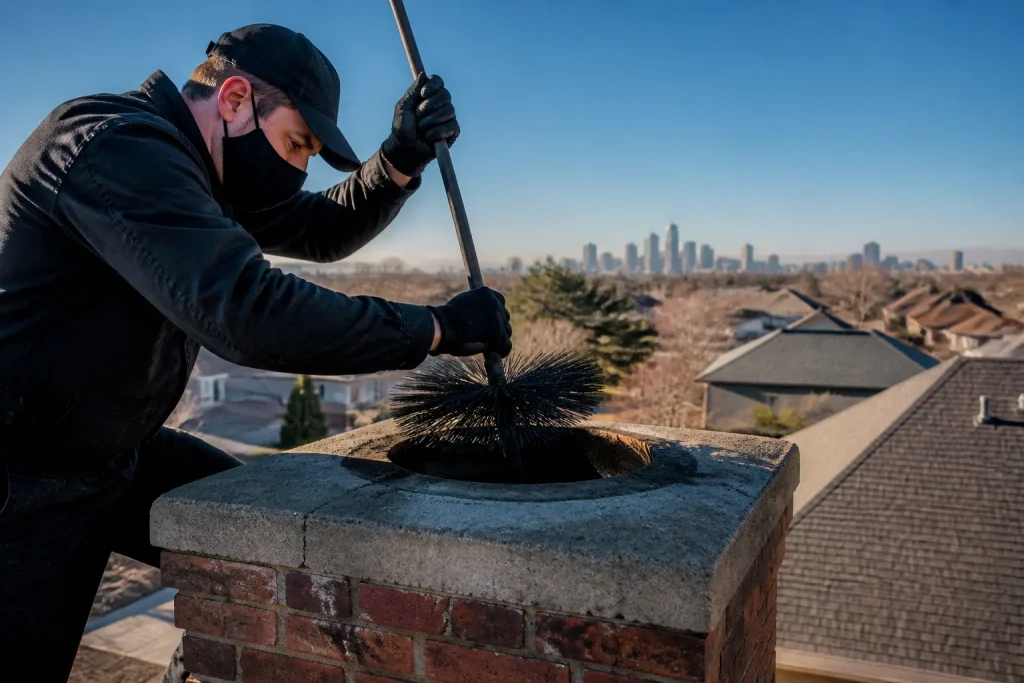
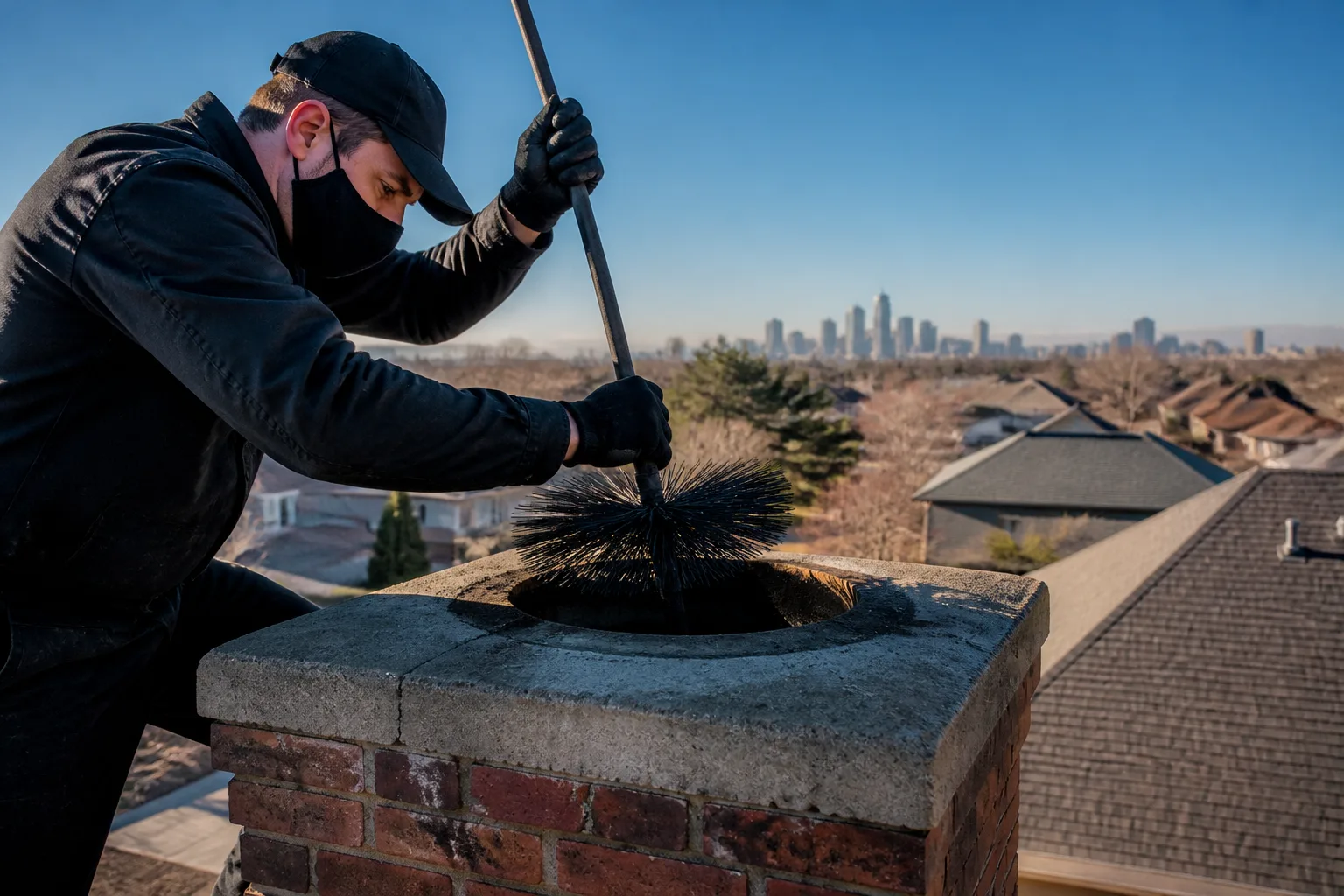
Famco Chimney Sweep in North Dallas: A Homeowner’s Guide
Ordering a Famco chimney cap by diameter alone is one of the most common installation mistakes we see in North Dallas. A cap that doesn’t match the flue tile shape, or that ignores the liner sitting inside it, will leak within a single season. Famco makes solid, widely specified chimney components, but like any professional-grade brand, the product only performs when it’s matched to your actual flue. This guide covers what Famco makes, where each component belongs in a chimney system, and what to verify before you request Famco by name.
If you’d rather have a technician measure and fit the right component than sort through spec sheets yourself, call (833) 468-3242. Estimates are free.
What Does Famco Actually Manufacture?
Famco manufactures chimney caps, draft inducers, and venting connectors. It does not make flexible chimney liners, resurfacing systems, or structural fireplace repair materials. Knowing that boundary matters, because a contractor who says “we’ll use Famco for the whole job” is either confused about the product line or hoping you are.
Here’s the practical breakdown of what Famco components do in a residential chimney:
- Chimney caps – the lid on top of the flue that keeps rain, animals, and debris out while letting smoke escape. This is the most common Famco product in North Dallas homes.
- Draft inducers – a powered or mechanical fan assembly mounted at the flue top that pulls exhaust up and out when a chimney struggles to draft on its own.
- Venting connectors – the fittings that tie appliance flues and vent runs together, used more often on heating appliance venting than on open fireplaces.
What Famco doesn’t cover is just as important. If your chimney needs a new liner, resurfacing, crown rebuild, or firebox masonry work, those come from other professional product lines. We work with six brands for exactly this reason: DuraFlex for flexible liner systems, HeatShield for liner resurfacing, and Gelco or Famco for caps, among others. Matching the product to the condition is the whole job. A one-brand contractor ends up forcing one product onto every problem.
Galvanized vs. Stainless Steel Famco Caps in North Dallas Weather
Famco caps come in galvanized steel and stainless steel, and in North Dallas the difference shows up faster than most homeowners expect. Our summers deliver intense UV and long stretches of heat, and our occasional ice storms put a sudden load on anything sitting on the roof. Those two conditions stress a cap in different ways.
Galvanized steel carries a zinc coating that resists rust, and it costs less up front. Under steady North Dallas sun, that coating weathers and dulls over time. It’s a reasonable choice when budget is the deciding factor, and it holds up fine when it’s sized and installed correctly.
Stainless steel resists corrosion far longer and doesn’t chalk or degrade from UV the way galvanized coatings do. In our experience, for a homeowner planning to stay in the house, stainless is usually the smarter long-term pick. It also holds its appearance, which matters on a roofline you actually see from the street.
Whichever you choose, a properly sized cap is what keeps water out. An undersized or oversized cap lets wind-driven rain past the flue edge, and no steel grade fixes a fit problem. That’s why we measure first and recommend second. A chimney cap & crown job starts with the flue, not the catalog.
Why Flue Measurement Must Include Liner Type, Not Just Tile Size
A correct Famco cap fit requires three measurements, not one. If a contractor shows up, measures the outside of the clay flue tile, and orders a cap, the cap will likely leak or sit wrong. Here’s what actually has to be checked:
- The outer flue tile dimension – the standard measurement most people think of, taken across the outside of the clay tile.
- The flue tile shape – round, square, rectangular, or oval. Famco caps are made for specific shapes, and a round cap on a rectangular flue leaves gaps at the corners.
- The liner type and inner dimension – whether a flexible stainless liner or a resurfaced liner sits inside the tile, and what its inner diameter is. A cap must clear the liner and still seal to the tile top.
That third point is where the mistakes happen. A chimney with a DuraFlex flexible liner installed inside the original tile has a different effective opening than the tile alone suggests. Order a cap by tile size only and it either won’t seat or won’t seal. We’ve seen caps lift off in a strong storm for no reason other than a mismatch nobody checked.
In North Dallas, where mature trees drop debris and summer storms arrive fast, a loose cap becomes a water intrusion problem within weeks. Water gets into the flue, damages the damper, and works into the firebox masonry. Measure the whole assembly, not just the visible tile, and the cap does its job for years.
How Famco Draft Inducers Solve Chronic Backdraft
A Famco draft inducer is a fan assembly installed at the top of the flue that mechanically pulls exhaust up and out. It’s for chimneys that consistently fail to draft: smoke rolling into the room on startup, a fireplace that won’t stay lit, or a smell of smoke in the house when the fire is going. In North Dallas, where homes sit close together and rooflines vary, pressure differences from neighboring structures and prevailing winds can cause backdraft that no amount of sweeping fixes.
The installation process typically involves:
- An inspection to confirm the draft problem is a pressure or flue-height issue, not a blockage or a damaged liner.
- Verifying the flue is sound and properly sized before adding mechanical draft, since a fan can’t fix a cracked liner or a blocked flue.
- Mounting the inducer at the flue top with a weatherproof seal, wired to a control that runs it when the fireplace or appliance is in use.
- Testing draft after install to confirm smoke pulls cleanly and the assembly is sealed against rain.
A draft inducer is a targeted fix, not a first resort. Before recommending one, we want camera evidence that the flue is clear and the liner is intact. If the real problem is a damaged liner or a cracked crown letting in air, adding a fan just masks it. That’s why every job here starts with an inspection.
Questions to Ask Before You Request Famco by Name
Asking the right questions separates a contractor who installs genuine, correctly sized Famco components from one who substitutes a generic cap and calls it the same thing. North Dallas homeowners who’ve had a sweep before often tell us nobody ever told them what brand would go on their chimney or why. Here’s how to change that.
Ask these before you book:
- “Will you measure the flue tile shape, outer dimension, and the liner before ordering the cap?” A yes means they understand fit. A shrug means they’ll order by diameter.
- “Are you installing a genuine Famco component, and can you show me the product spec?” Genuine parts come with identifiable specs; substitutes don’t.
- “If my chimney has a liner, will the cap accommodate it?” Liner clearance is the most overlooked measurement.
- “Do you document what you find before recommending anything?” We photograph and record findings so you see the evidence, not just a sales pitch.
- “Is the estimate written, and does it set the final price?” The written estimate should be the number that sticks.
One lighthearted note: if a contractor can’t tell you the difference between a cap and a crown, that’s your cue to keep asking questions. A fireplace repair or cap job is only as good as the diagnosis underneath it. From the cap down to the firebox, we handle the full system, so you’re not piecing together three contractors to solve one leak.
Our technicians have up to 12 years of experience, and we work with professional-grade materials from Gelco, Olympia Chimney, Famco, and Copperfield, matched to each chimney’s actual condition. We’re the local Chimney Sweep North Dallas team homeowners call when they want straight answers about what’s on their roof.
When to Call a Pro Instead of Ordering a Cap Yourself
Replacing a cap is one of the few chimney tasks that looks simple from the ground and turns dangerous on the roof. A cap sits at the top of a flue on a pitched roofline, and climbing up there without fall protection is a genuine safety risk. Add the measurement complexity (tile shape, liner clearance) and a self-ordered cap is more likely to leak than to fix anything.
Call a professional when:
- You don’t know your flue tile shape, outer dimension, or liner type.
- You’ve had water coming in and aren’t sure whether the cap, the crown, or the flashing is the source.
- Smoke rolling into the room suggests a draft problem that needs diagnosis, not a new lid.
- Your roofline is steep or high enough that getting up there safely isn’t realistic.
Call (833) 468-3242. We answer 24/7. Fast dispatch from 7am to 7pm, Sunday through Friday.
Related services in North Dallas: a chimney sweep clears creosote and confirms the flue is clear before any cap or draft work; cap and crown work seals the top; and fireplace repair addresses the interior once water has gotten in.
The Bottom Line
Famco makes chimney caps, draft inducers, and venting connectors, and it makes them well. What it doesn’t make is liners, resurfacing systems, or structural repair materials, so a Famco cap belongs in a job that also accounts for the liner under it. The three points worth remembering: measure the flue tile shape and the liner, not just the diameter; choose stainless if you plan to stay in the house, given our UV and ice-storm conditions; and confirm a contractor installs genuine, correctly sized components and documents why.
If you’re in North Dallas and need help sorting out whether a Famco cap, a draft inducer, or something else is the right fix, Chimney Sweep North Dallas offers free estimates. Call (833) 468-3242. We answer 24/7. Fast dispatch from 7am to 7pm, Sunday through Friday. The written estimate sets the final price, and nothing gets recommended without evidence you can see.
Frequently Asked Questions
Famco makes chimney caps, draft inducers, and venting connectors. It does not manufacture flexible liners, liner resurfacing systems, or masonry repair materials, so a Famco product covers the cap or draft side of a job, not a full liner replacement.
You need three measurements: the outer flue tile dimension, the flue tile shape (round, square, rectangular, or oval), and the liner type and inner dimension. A cap ordered by diameter alone commonly leaks or sits wrong within a season. Call (833) 468-3242 for an exact fit assessment; estimates are free.
Stainless steel is the better long-term choice in North Dallas because it resists UV degradation and the occasional ice storm better than a galvanized coating, which dulls and weathers over time. Galvanized costs less up front and works fine when correctly sized. Either way, correct fit matters more than the steel grade.
A draft inducer is used when a chimney chronically fails to draft: smoke rolling into the room, a fire that won’t stay lit, or smoke smell inside the house during use. Before recommending one, we confirm with a camera inspection that the flue is clear and the liner is intact, because a fan can’t fix a blockage or a cracked liner. Call (833) 468-3242 to book an inspection.
Written by the team at Chimney Sweep North Dallas.
Need Chimney Cleaning Help?
Call Chimney Sweep North Dallas - the local pro we connect you with is licensed and insured, with free written estimates in North Dallas.
(833) 468-3242