
Last updated November 25, 2026
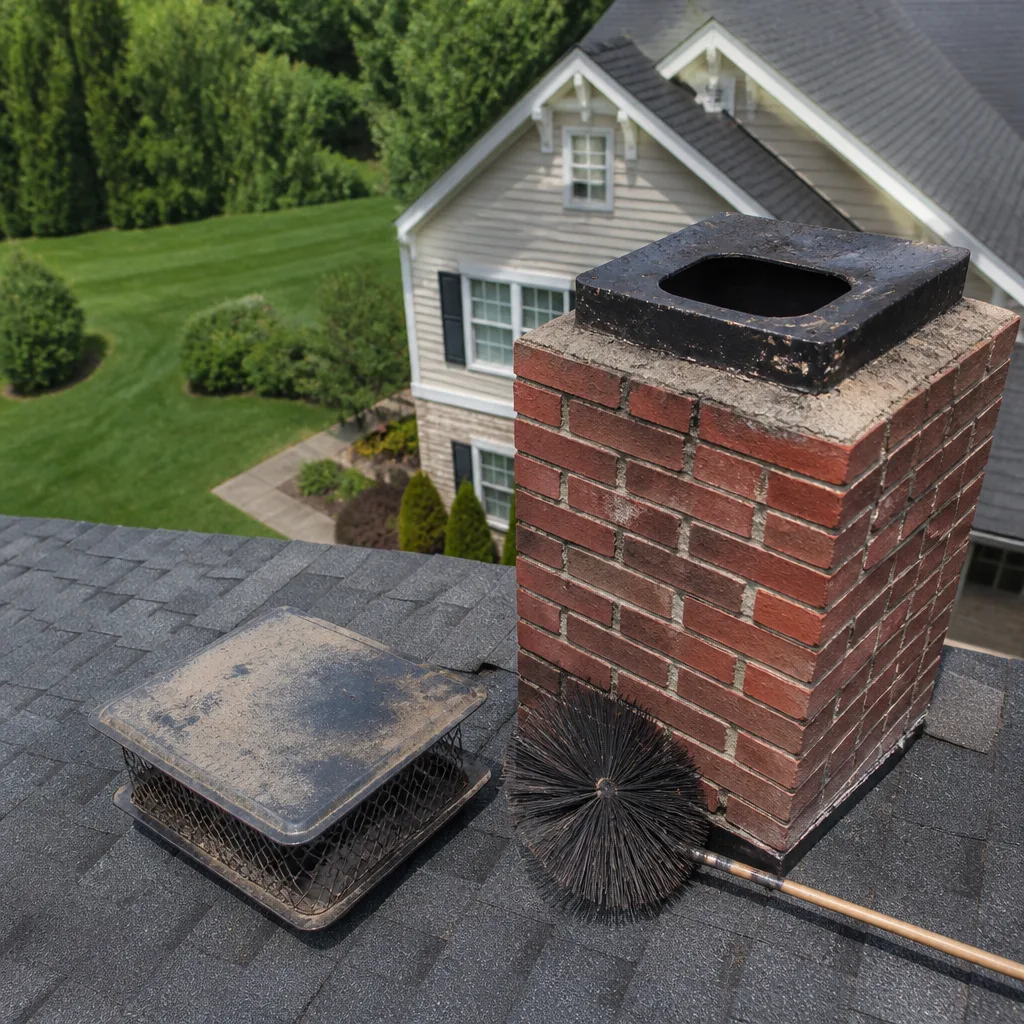 Sweep & inspection
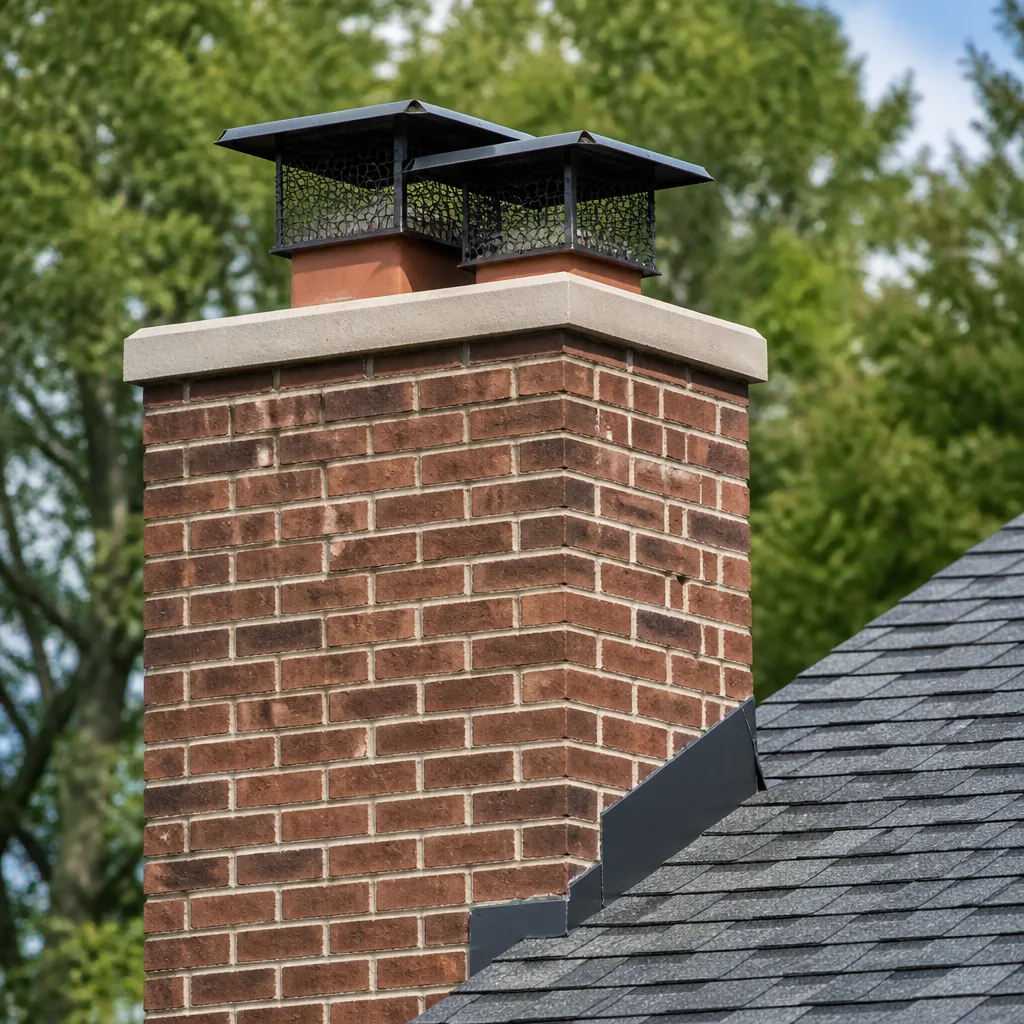 Caps & crowns
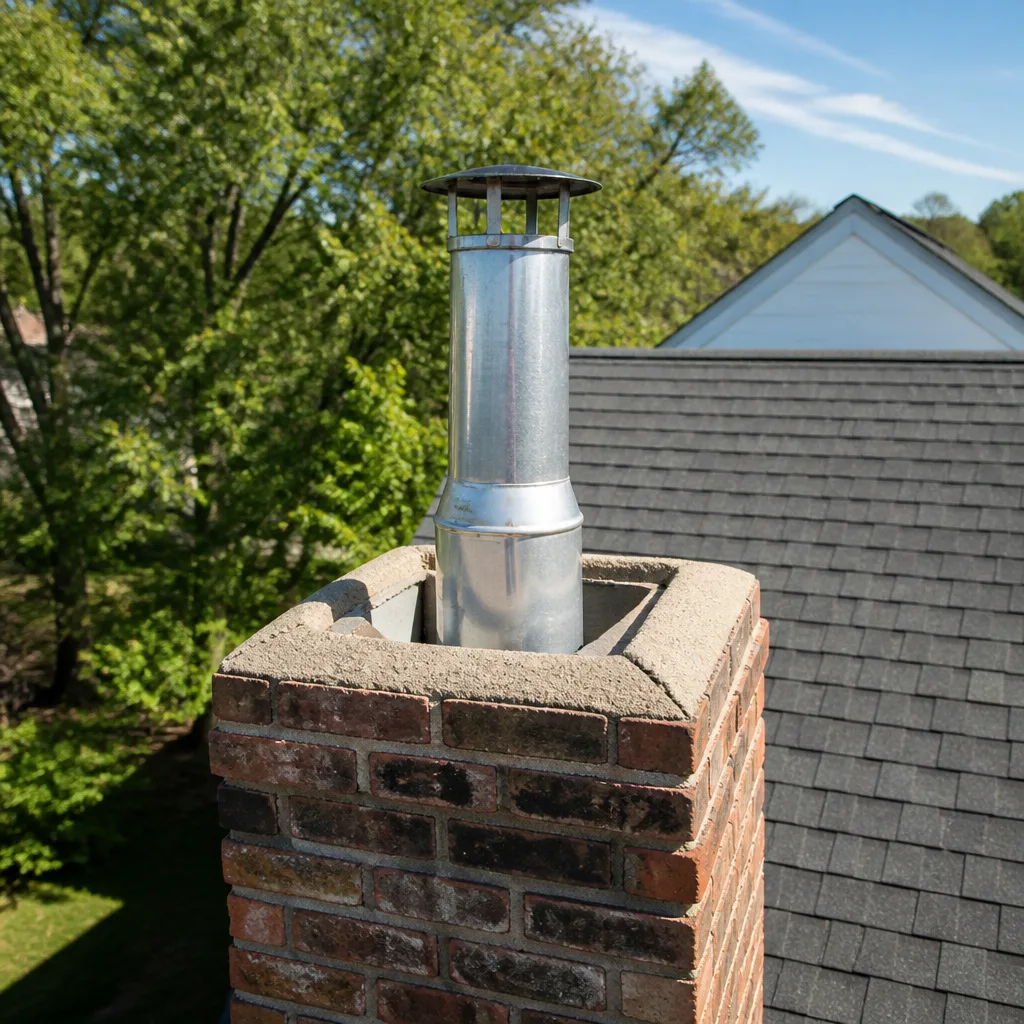 Flue relining
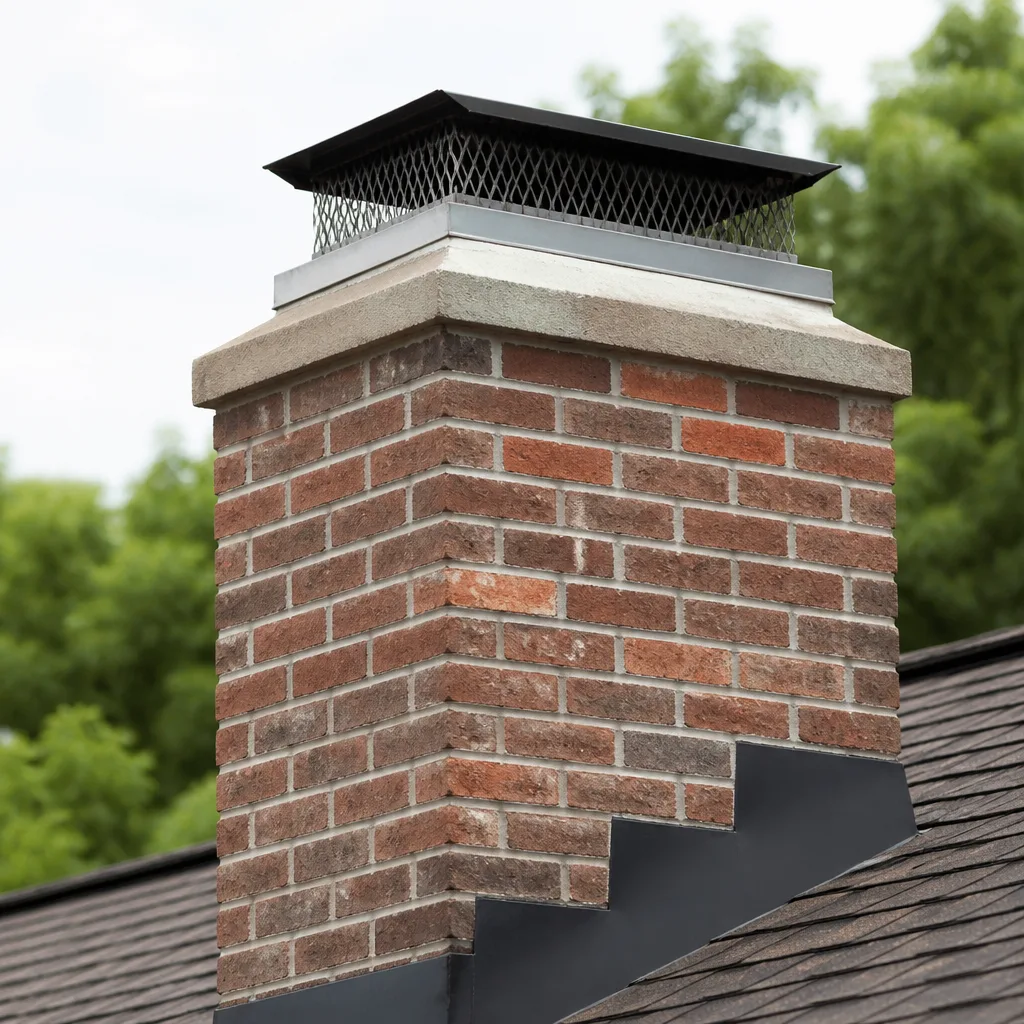 Masonry repair
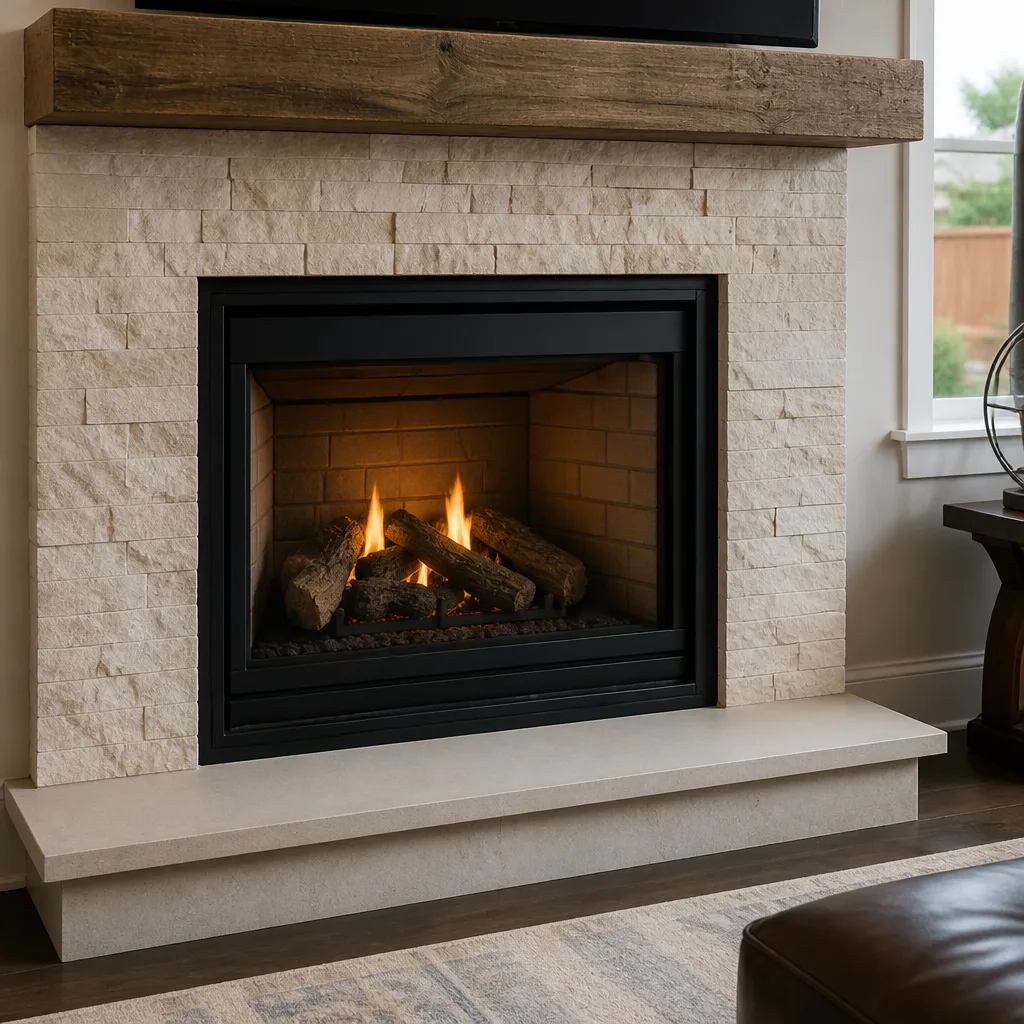 Gas fireplace service
Level 1 sweep and inspection to the NFPA 211 annual standard - flue, crown, cap, and flashing checked and photographed
Chimney sweep logs do not sweep chimneys. They loosen some creosote - which then falls where a brush and vacuum still have to collect it.
DIY vs Professional Chimney Cleaning: The North Dallas Homeowner’s Decision Guide
Most homeowners who consider cleaning their own chimney assume the question is about skill. It isn’t. It’s about sight. A brush on a rod can knock loose soot off a flue wall, but it cannot show you the hairline crack running along a tile joint two feet above the smoke chamber, the glazed Stage 2 creosote baked onto the smoke shelf, or the separated seam in a liner you’d never know was failing. You’d finish the job, look up a clean flue, and feel satisfied. The dangerous part was never the soot you could reach. This guide breaks down exactly what DIY cleaning can and cannot accomplish, which conditions make it reasonable, which make it a genuine risk, and how the mix of older masonry and newer prefab chimneys across North Dallas changes the math from house to house.
Quick Answer
DIY chimney cleaning is appropriate only for removing light, Stage 1 creosote from a simple masonry flue you can fully see and reach from the top, and only if you’ve had a professional inspection confirm the flue is sound first. For anything involving Stage 2 or Stage 3 creosote, a prefab metal fireplace, a lined flue, or any chimney you can’t visually assess from the inside, professional cleaning and a camera scope are the safer and ultimately cheaper choice. In North Dallas, where older masonry chimneys and newer prefab fireplaces sit side by side, the right answer depends entirely on which system you have.
Styles & brands we work with
- Sweep & inspection
- Caps & crowns
- Flue relining
- Masonry repair
- Gas fireplace service
Table of Contents
- The Real Decision Point: It’s an Equipment Gap, Not a Skill Gap
- What DIY Chimney Cleaning Can Actually Accomplish
- The Three Conditions Where DIY Cleaning Is Genuinely Appropriate
- The Five Conditions Where DIY Cleaning Creates More Risk Than It Avoids
- What a Camera Scope Reveals That No DIY Process Can
- The Real Cost Comparison: DIY Kit vs Professional Sweep
- How North Dallas’s Masonry and Prefab Mix Changes the DIY Calculus
- Common Mistakes to Avoid
The Real Decision Point: It’s an Equipment Gap, Not a Skill Gap
You can buy a chimney brush kit, a set of fiberglass rods, and a shop vac for under fifty dollars. With those tools and an hour of effort, a careful homeowner can pull loose soot and ash out of an accessible masonry flue. If that were the whole job, DIY would win on cost every time. But the moment you accept that cleaning is only half of what a sweep actually does, the equipment gap becomes obvious.
A professional sweep carries tools a homeowner simply cannot buy at retail. A closed-circuit camera on a flexible rod lets a technician see the entire flue interior, from the damper up past the smoke chamber to the crown. That camera reveals things a brush never touches: cracked flue tiles, gaps in mortar joints, a liner that has pulled away from the chimney wall, or the glazed, tar-like Stage 2 creosote that clings to flue walls and won’t budge under a poly brush. None of that is visible from the firebox looking up, and none of it shows up on a homeowner’s post-cleaning inspection.
That’s the difference that matters. It isn’t that a homeowner lacks the coordination to run a brush. It’s that a brush answers one question (is the flue clean?) while a scope answers the question that actually protects your home (is the flue safe?). In our experience across North Dallas, the second question is the one that uncovers real problems, and it’s the one DIY can’t answer.
We treat every job as inspection-first for exactly this reason. When we send a chimney sweep out, the sweep is documented before any recommendation is made, so you see what we see.
What DIY Chimney Cleaning Can Actually Accomplish
It’s worth being specific about DIY’s real capabilities, because the honest answer is more than “don’t bother.” A homeowner with the right brush and a reasonable amount of caution can accomplish a defined set of tasks and nothing more.
DIY cleaning can remove Stage 1 creosote, which is the light, flaky, soot-like deposit that builds up after relatively clean, hot fires. It can clear loose ash and debris from the firebox and smoke shelf that a vacuum can reach. It can knock down soot on the upper flue walls from the roof, provided the chimney has a straight, accessible flue and the homeowner can safely get to the top. That’s a real list, and for some homeowners it delivers genuine value between professional visits.
DIY cleaning cannot remove Stage 2 creosote, the hard, shiny, tar-glazed deposit that forms when fires burn cooler or with insufficient air. A poly brush slides right over it. It cannot remove Stage 3 creosote, the dense, puffy, fuel-rich coating that is the most combustible and the most dangerous. It cannot inspect a flue tile, verify a liner, evaluate a crown, or confirm that a smoke chamber is properly parged. Those are assessment tasks, not cleaning tasks, and they require equipment the homeowner doesn’t have.
If you’ve had a sweep before and were never told which brush type was used or why, that’s a sign the visit was cleaning-only. A proper sweep should include a scope and a documented report, and the difference between that and a brush-and-go is significant for anyone deciding whether DIY is a reasonable substitute.
The Three Conditions Where DIY Cleaning Is Genuinely Appropriate
There’s a narrow but real set of circumstances where cleaning your own chimney between professional visits is a defensible choice. All three conditions should apply, not just one.
- You have a simple, straight masonry flue with a sound, inspected liner. If a professional inspection has already confirmed your flue tiles are intact, your liner is in good shape, and there are no gaps or cracks, then what’s left to remove between visits is light Stage 1 creosote. That’s within DIY’s reach. If that inspection has never been done, the first step isn’t cleaning; it’s booking one.
- You’re cleaning frequently enough that heavy creosote never has a chance to form. A homeowner who sweeps seasonally or understands their burn habits well enough to stay ahead of buildup is doing maintenance, not remediation. The risk profile is entirely different from someone who hasn’t cleaned in years and is now trying to correct accumulated deposits with a brush.
- You can safely and confidently access the roof and the flue from the top. If accessing your roofline requires ladders, height work, or conditions you’re not comfortable with, that alone disqualifies DIY. Roof access is where most DIY chimney injuries happen, and no amount of cleaning value outweighs a fall risk. Refer this to a professional.
If even one of those conditions fails in your North Dallas home, the calculation shifts toward professional service. Homes in neighborhoods like Preston Hollow and Melshire Estates, many of which have older masonry chimneys, often fail the first condition until an inspection confirms otherwise. The condition that matters most is condition one, and it can only be established by an inspection.
The Five Conditions Where DIY Cleaning Creates More Risk Than It Avoids
These are the five conditions where DIY cleaning, no matter how carefully done, increases risk rather than reducing it. If any of these apply to your home, the decision is clear.
- Your chimney has a prefab metal fireplace insert. Prefab fireplaces have a specific, thin-walled metal flue with manufacturer-specific clearance requirements. The wrong brush, an aggressive technique, or an inspection that never happens can damage a metal flue in ways a masonry flue would survive. Prefab systems are not DIY-friendly.
- There’s visible Stage 2 or Stage 3 creosote. Glazed, tar-like, or puffy creosote isn’t a sweeping problem; it’s a fire hazard that needs professional chemical or rotary removal. A brush won’t remove it, and the act of brushing can redistribute it rather than clear it.
- You have a lined flue you haven’t had inspected. A HeatShield-restored or DuraFlex-lined flue has different cleaning requirements than bare masonry. Without knowing the liner’s condition, DIY cleaning risks disturbing a system that was carefully installed to protect the chimney. Inspection comes first.
- You can’t see the whole flue interior. If you can’t see the smoke chamber, the smoke shelf, and the upper flue, you can’t know what you’ve cleaned or what you’ve missed. That’s an assessment gap, and it’s the one that matters most.
- There’s any evidence of prior chimney damage. A cracked tile, a spalling crown, water staining on the firebox, or a damper that doesn’t seat properly are all signs that the chimney needs a professional evaluation before anyone runs a brush through it. Cleaning a damaged flue can make the damage worse.
In our experience working North Dallas homes, these five conditions show up more often than homeowners expect. The combination of a chimney cap that’s been missing for a few seasons and a firebox that’s been used heavily is enough to create real Stage 2 buildup that no brush will fix. It’s also a good reminder that a missing or damaged cap is one of the most common sources of water intrusion we see, which is why chimney cap & crown work is part of a complete assessment, not an afterthought.
What a Camera Scope Reveals That No DIY Process Can
The camera scope is the single biggest difference between DIY cleaning and a professional visit. It’s also the part homeowners most often don’t realize is missing from a DIY job. Here’s what a scoped inspection actually uncovers, drawn from the kinds of findings that show up routinely in North Dallas homes.
A scope reveals flue tile damage that isn’t visible from the firebox. A tile can crack along a seam, or a joint can open up as a chimney settles, and both allow heat and combustion gases direct contact with framing or the chimney structure. You will not see either from the bottom looking up, and a brush does nothing to address them. A scope also catches liner seam separation. If a flexible liner has pulled away from the wall or a joint has opened, the chimney is no longer doing the job it was installed to do, and the homeowner has no way of knowing without seeing inside.
Beyond tiles and liners, a scope reveals the condition of the smoke chamber and smoke shelf. These are the areas where Stage 2 creosote most often glazes onto the surface, where debris collects, and where a poorly parged chamber can allow creosote to migrate behind the flue tile. A scope also shows the crown and the top of the flue from the inside, which is often where a failing crown first announces itself as a trickle of water staining or a widening crack.
When we find a problem during a scoped inspection, we document it with photos and explain what it is before recommending any work. If a liner can be restored with HeatShield rather than replaced outright, that’s the conversation we have, and the evidence supports the recommendation either way. That’s the standard we hold: nothing gets recommended without a camera image the homeowner can see for themselves.
The Real Cost Comparison: DIY Kit vs Professional Sweep
The cost comparison is rarely as lopsided as it looks at first. A DIY brush kit plus consumables comes in around $45 to $100 depending on flue size and brush type. A professional sweep in the North Dallas market typically runs $150 to $300 for a standard cleaning, with a camera inspection often included or available as an add-on. But the gap between those two numbers isn’t the whole story, because DIY has hidden costs that show up later.
| Item | Typical DIY Cost | Typical Professional Cost |
|---|---|---|
| Basic brush kit and rods | $45-$100 | Not applicable |
| Consumables (poly brushes, drop cloths, vacuum bags) | $20-$40 per year | Included |
| Professional sweep | Not applicable | $150-$300 |
| Camera inspection | Not available | Included or add-on |
| Correcting a DIY mistake (damaged flue, disturbed liner) | $300-$1,500+ depending on damage | Not applicable |
| Two-year DIY total (kit plus consumables) | $85-$180 | Not applicable |
| Two-year professional total (two sweeps) | Not applicable | $300-$600 |
That last row is where the comparison actually resolves. Over two years, a homeowner who sweeps twice a year with a DIY kit spends less than a homeowner who books two professional sweeps. But the DIY total doesn’t include the cost of a correction if a brush damages a flue tile or disturbs a liner seam, and it doesn’t include the inspection that would have caught a problem before it became a structural issue. Those corrections are where DIY gets expensive, and the damage often isn’t visible until a professional scope finds it. The written estimate sets the final price on any repair, and an inspection first tells you whether you need one at all.
How North Dallas’s Masonry and Prefab Mix Changes the DIY Calculus
North Dallas has an unusual mix of chimney systems, and that mix is why there’s no single answer to the DIY question. Older neighborhoods here tend to have masonry chimneys, built as part of the original home construction, with tile flues and traditional fireboxes. Newer construction and many renovated homes have prefab metal fireplaces with thin-walled, factory-built flues. The two systems have completely different risk profiles, and DIY cleaning treats them identically, which is the problem.
A masonry chimney is more forgiving of a brush. The tile flue can withstand a properly sized poly brush, and the failure modes (cracked tiles, opened joints, a failing crown) are things a scope catches but a brush generally doesn’t worsen if the flue is otherwise sound. It’s also the kind of system where Stage 1 creosote buildup is more predictable, and where a homeowner can reasonably learn their burn habits and stay ahead of it.
A prefab metal fireplace is a different animal. The flue is thinner, the clearances to combustibles are manufacturer-specific, and the system depends on its integrity in ways that masonry doesn’t. A brush sized for a masonry flue can damage a prefab flue. A homeowner who doesn’t know the difference can do real harm without realizing it, and the stove or insert may not show any sign until the problem is significant.
That’s why we bring a full material portfolio to every job: DuraFlex for flexible liner systems, HeatShield for liner resurfacing, and Gelco, Olympia Chimney, and Famco for the caps, vents, and components that fit each system properly. Matching the right product to the right chimney is the reason the DIY calculus differs from one North Dallas house to the next. And when a prefab unit needs repair, that’s often fireplace repair territory, not a cleaning job.
Common Mistakes to Avoid
- Cleaning before inspecting. Running a brush through a flue you haven’t had scoped is the single most common DIY mistake. You can’t safely clean what you haven’t confirmed is sound, and a cracked tile can be made worse by a brush that’s working a damaged surface.
- Using the wrong brush for the flue type. A poly brush is appropriate for masonry; a metal brush or one sized for a larger flue can damage a thin prefab metal flue. Know your flue type before you buy a brush, and if you don’t know, don’t clean it.
- Assuming a clean flue is a safe flue. A flue can look clean from the firebox and still have a separated liner, a cracked tile above the smoke chamber, or a crown that’s letting water in. Cleaning addresses one problem; it doesn’t rule out the others.
- Ignoring the chimney cap and crown. A missing or damaged cap is one of the most common sources of water intrusion we see in North Dallas, and water damage is often the root cause of the flue problems a homeowner later finds. Cleaning without addressing the cap is fixing the symptom, not the cause.
- Cleaning a prefab fireplace without checking the manufacturer’s requirements. Prefab inserts have specific maintenance requirements tied to the manufacturer. A generic brush-and-rod approach that works for masonry is not appropriate here, and the risk of damage is real.
- Skipping the seasonal sweep because DIY felt sufficient. Even a homeowner who cleans between visits still needs a professional sweep and inspection on a regular schedule. DIY maintenance doesn’t replace the inspection that catches what a brush can’t reach.
- Assuming heavy creosote will come off with more brushing. Stage 2 and Stage 3 creosote don’t respond to a brush, and brushing over them can redistribute rather than remove. Glazed creosote needs professional rotary or chemical removal.
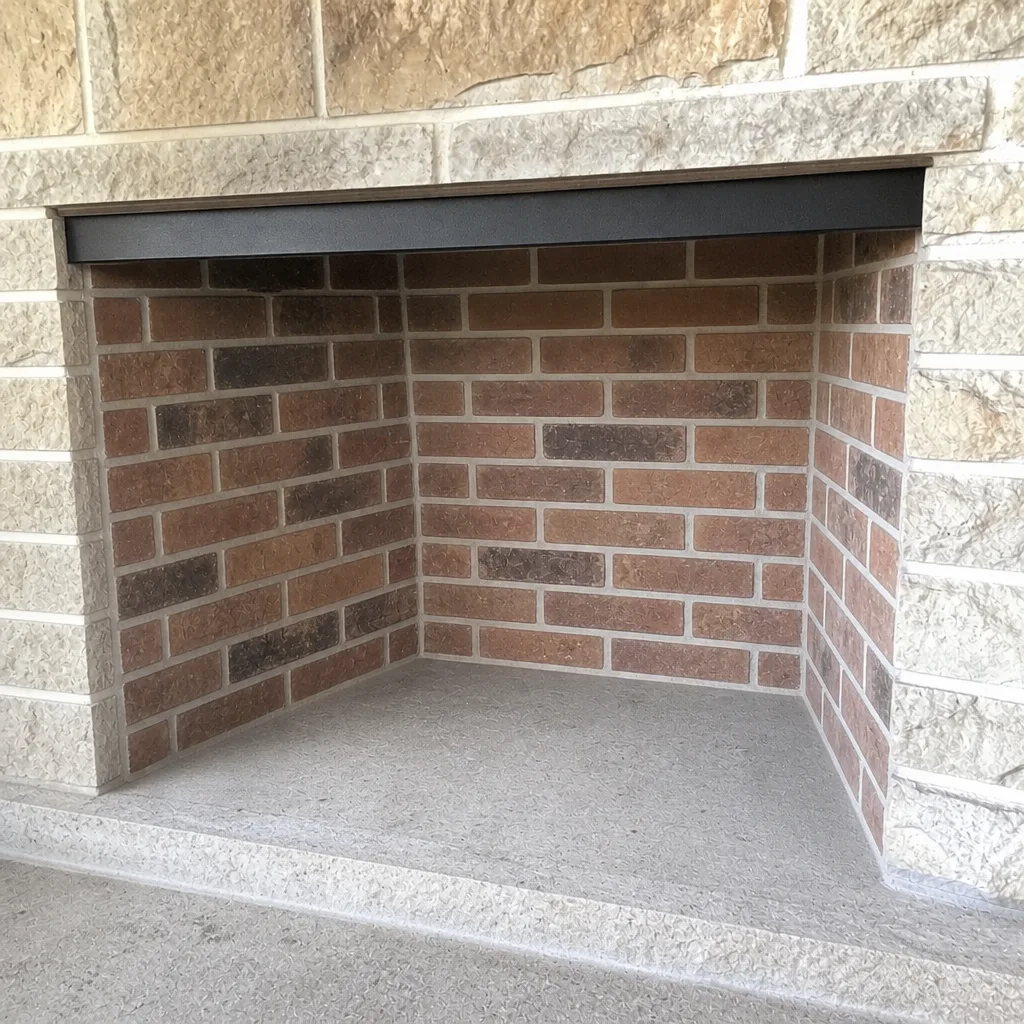
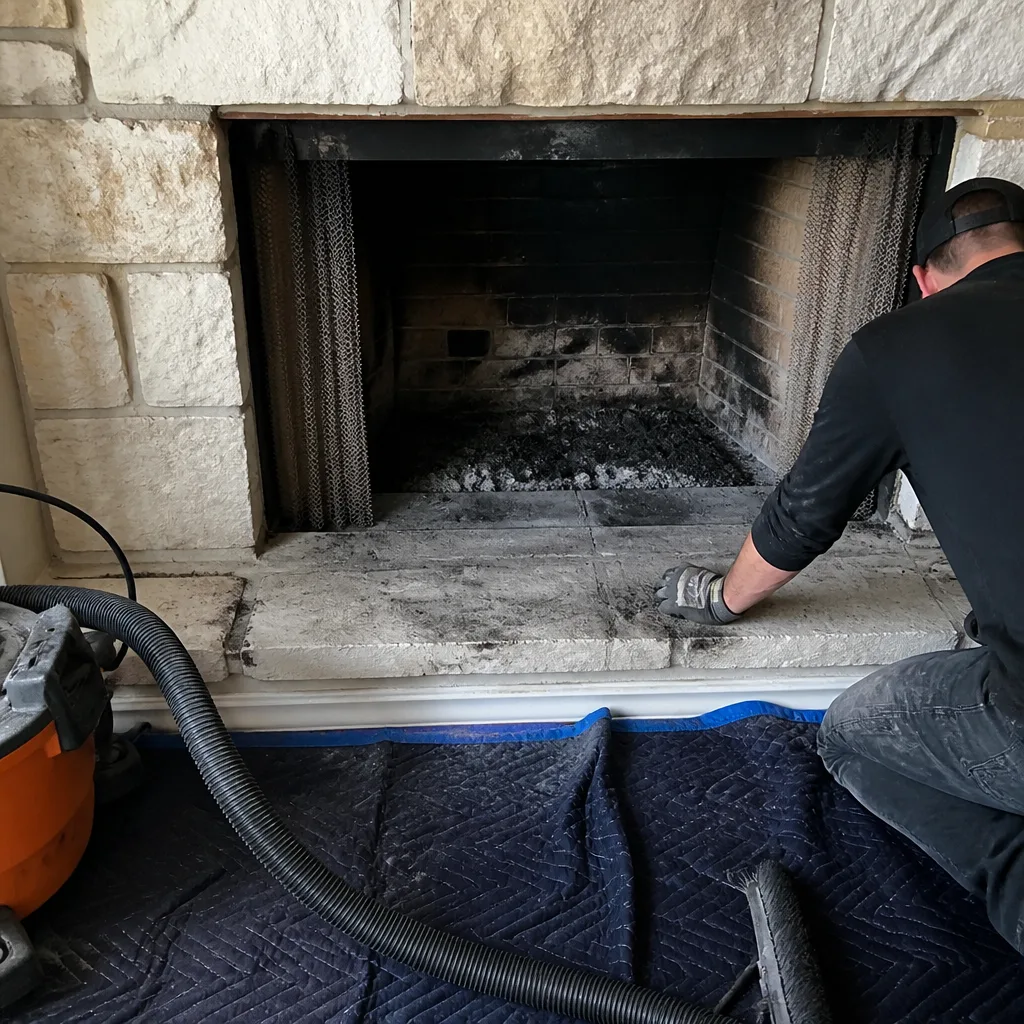
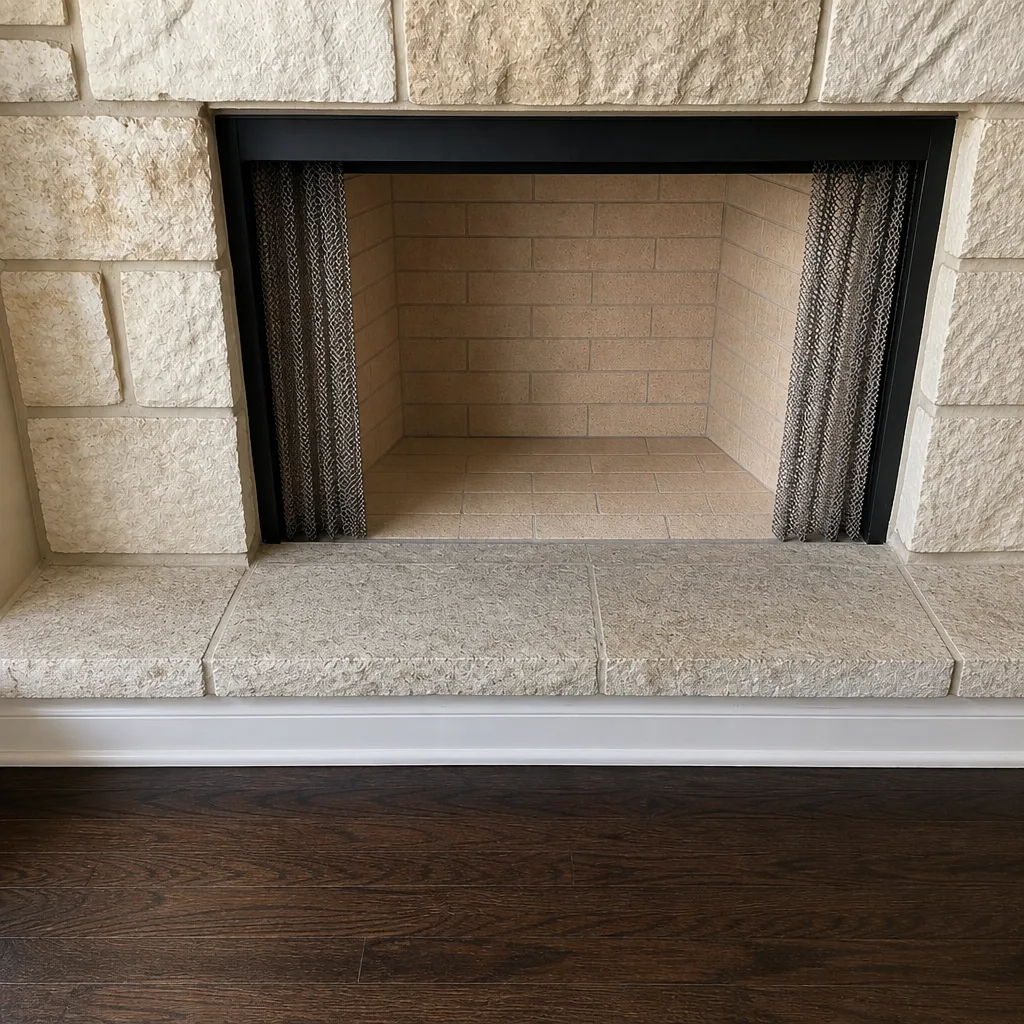
See the difference
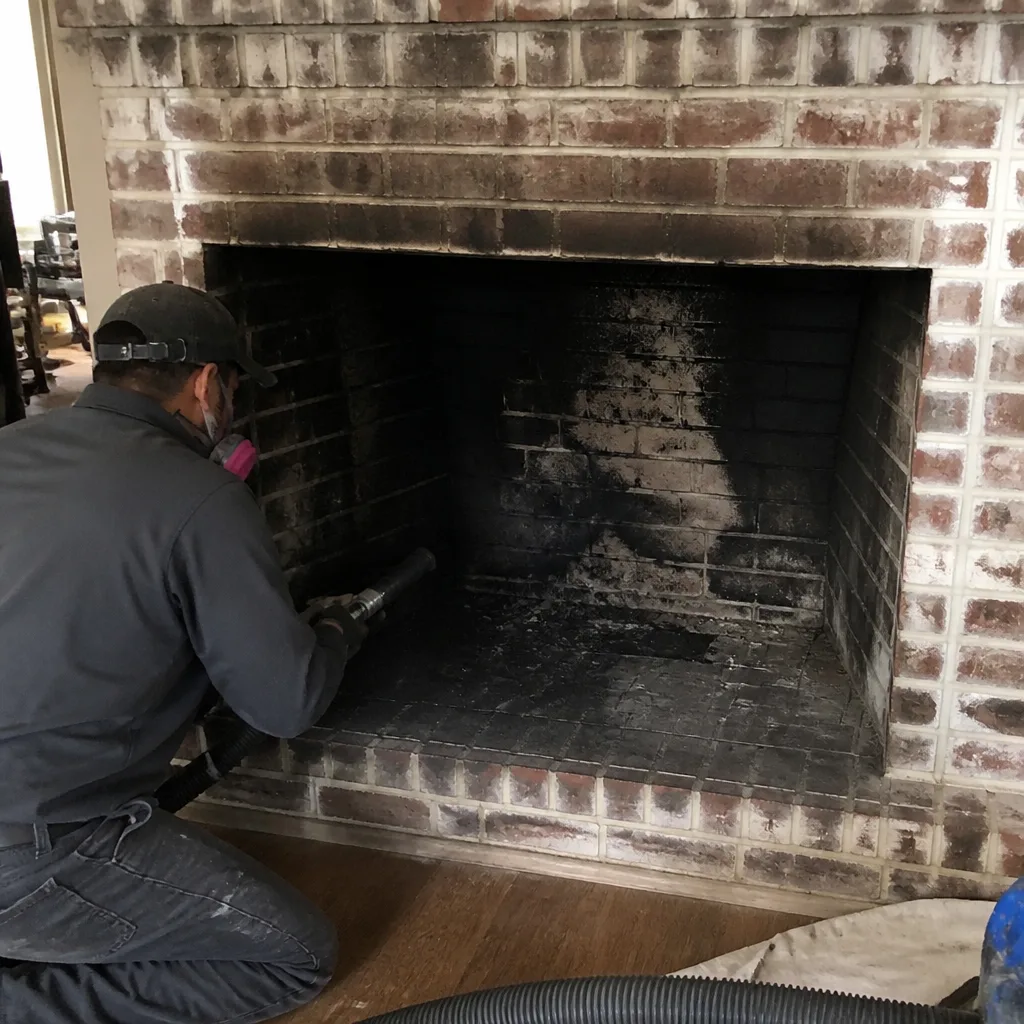 Before
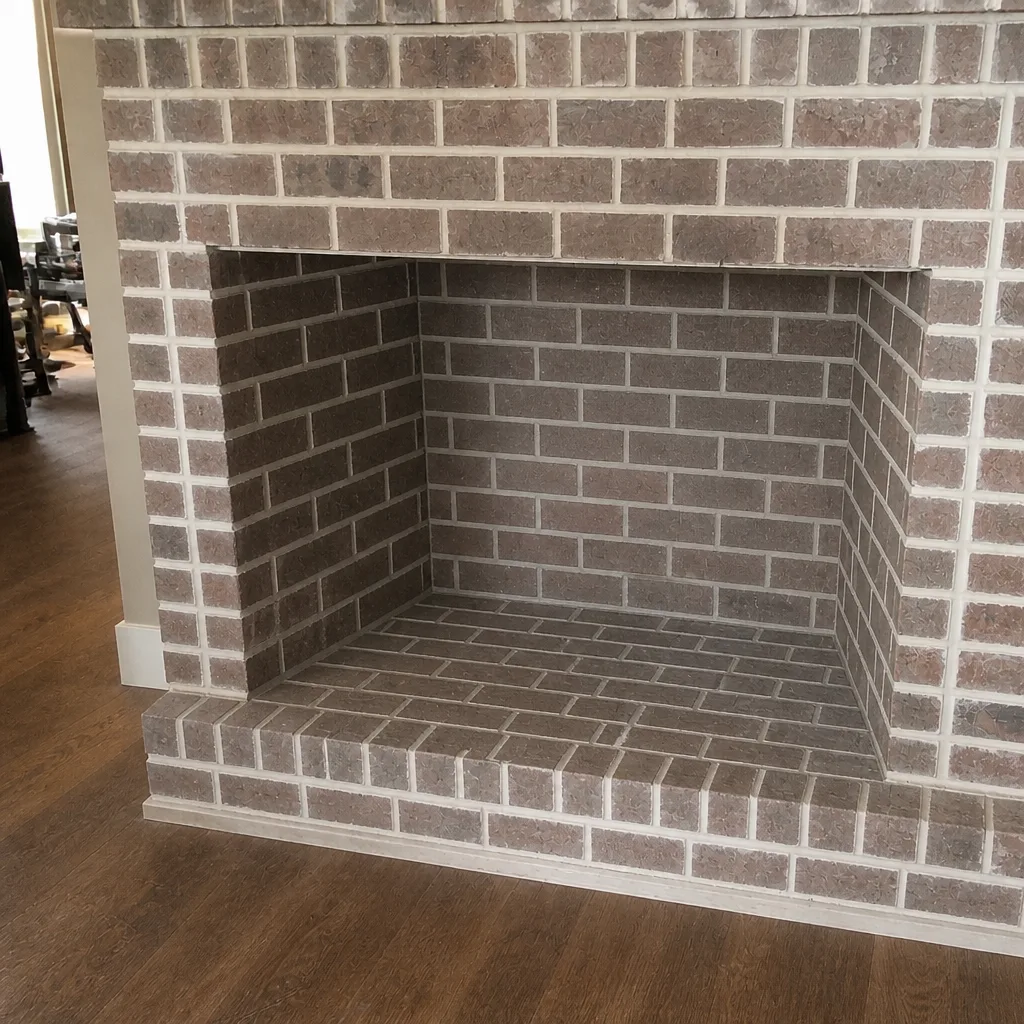 After
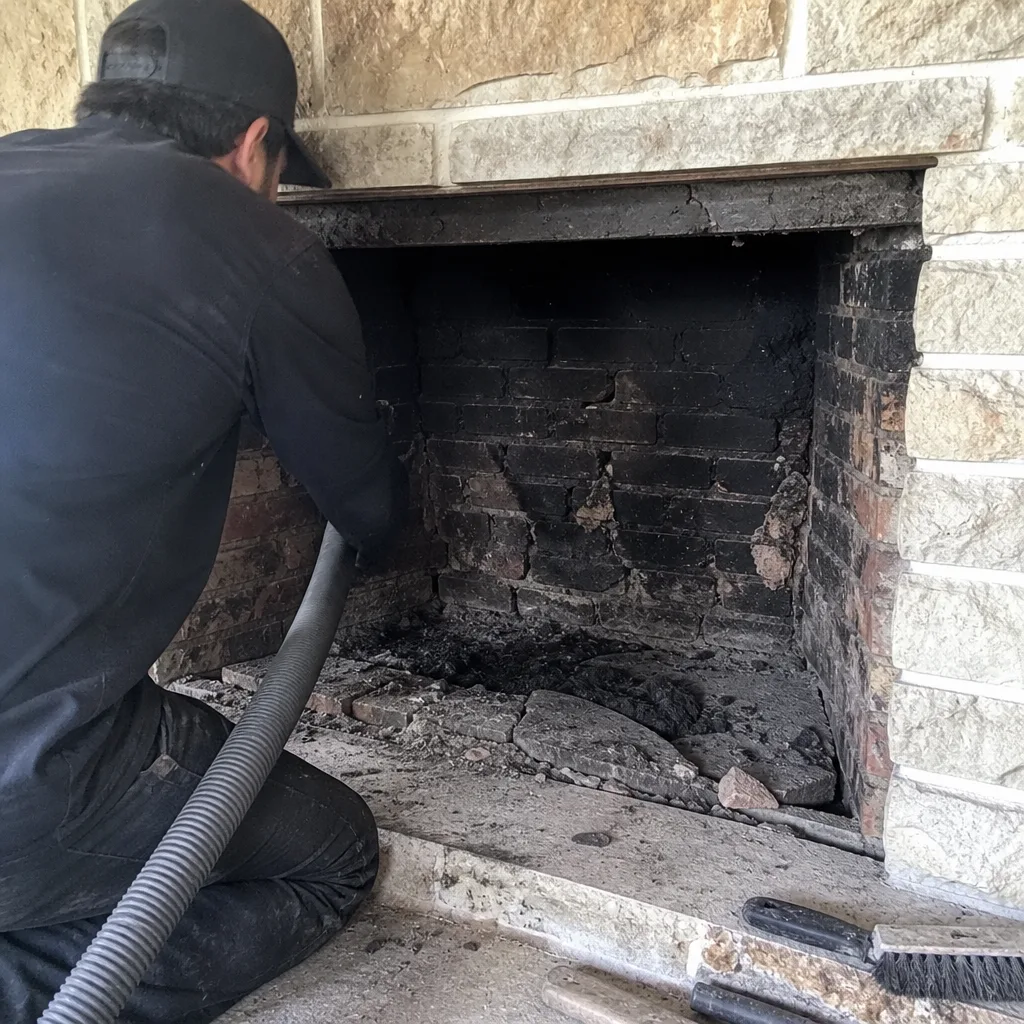 Before
 After
 Before
 After
When to Call a Professional
Call a professional if any of these apply: your chimney hasn’t been inspected, you’ve never had it scoped, you’re not sure whether you have masonry or prefab, you see glazed or puffy creosote, you’ve noticed water staining, your cap is missing or damaged, or you can’t safely access the roof. Those are all clear signals that the decision has moved past the DIY question. And if you’ve read this far and still aren’t sure which category your chimney is in, that uncertainty is itself the answer. Chimney Sweep North Dallas offers free estimates in North Dallas. Call (833) 468-3242. We answer 24/7. Fast dispatch from 7am to 7pm, Sunday through Friday. Our technicians have up to 12 years of experience, and every visit starts with inspection, not a brush.
Frequently Asked Questions
You can remove light Stage 1 creosote from a simple masonry flue you can safely access, but only after a professional inspection has confirmed the flue is sound. You cannot safely clean a prefab metal fireplace, remove Stage 2 or Stage 3 creosote, or assess liner condition without professional equipment. If you don’t know which category your chimney falls into, have it inspected first. Call (833) 468-3242 for an exact quote. Estimates are free.
A standard professional sweep in the North Dallas market typically runs $150 to $300, with camera inspection often included or available as an add-on. The written estimate sets the final price, and it’s agreed before any work begins. Call (833) 468-3242 for an exact quote. Estimates are free.
Most wood-burning chimneys should be swept and inspected once a year, and more often if you burn heavily or notice creosote buildup. The right interval depends on how much you burn, what you burn, and what the inspection finds. Call (833) 468-3242 for an exact quote. Estimates are free.
Creosote accumulates whether or not you clean it, and Stage 2 and Stage 3 creosote are the fuel for a chimney fire. Beyond fire risk, skipped sweeps mean skipped inspections, which is how cracked tiles, separated liners, and water intrusion go unnoticed until they become structural repairs. A sweep and a scope catch problems while they’re still small. Call (833) 468-3242 for an exact quote. Estimates are free.
Yes. Prefab metal fireplaces have thin-walled flues with manufacturer-specific maintenance requirements, and the wrong brush or technique can damage the flue in ways a masonry chimney would survive. Professional cleaning is the safer choice for any prefab system. Call (833) 468-3242 for an exact quote. Estimates are free.
That depends on your chimney’s condition, which is why we inspect first. We work with six professional-grade product lines: DuraFlex for flexible liner systems, HeatShield for liner resurfacing, Gelco and Famco for caps and vents, Olympia Chimney for components, and Copperfield as part of our material portfolio. We match the product to the condition and explain the recommendation before any work begins. Call (833) 468-3242 for an exact quote. Estimates are free.
The Bottom Line
The DIY vs professional chimney cleaning decision isn’t really about whether you can run a brush. It’s about whether you can see what you’re cleaning, and that’s an equipment question, not a skill one. A $45 brush kit handles light Stage 1 creosote in a sound masonry flue. It can’t see a cracked tile, catch a liner seam separation, or remove Stage 2 glazed creosote, and those are the things that start chimney fires and turn small problems into structural repairs. In North Dallas, where older masonry and newer prefab chimneys sit side by side, the right answer depends on which system you have. If you’re not sure, that’s the reason to call. Chimney Sweep North Dallas handles the full system from Chimney Sweep North Dallas services down to the firebox, with inspection-first documentation and free estimates. Call (833) 468-3242. We answer 24/7. Fast dispatch from 7am to 7pm, Sunday through Friday.
Written by the team at Chimney Sweep North Dallas.